Start with unit records
Connect every Transit to its own identifier and current photographs.
Planning example from Chicago Fleet Wraps
Group verified details while preserving individual exceptions.
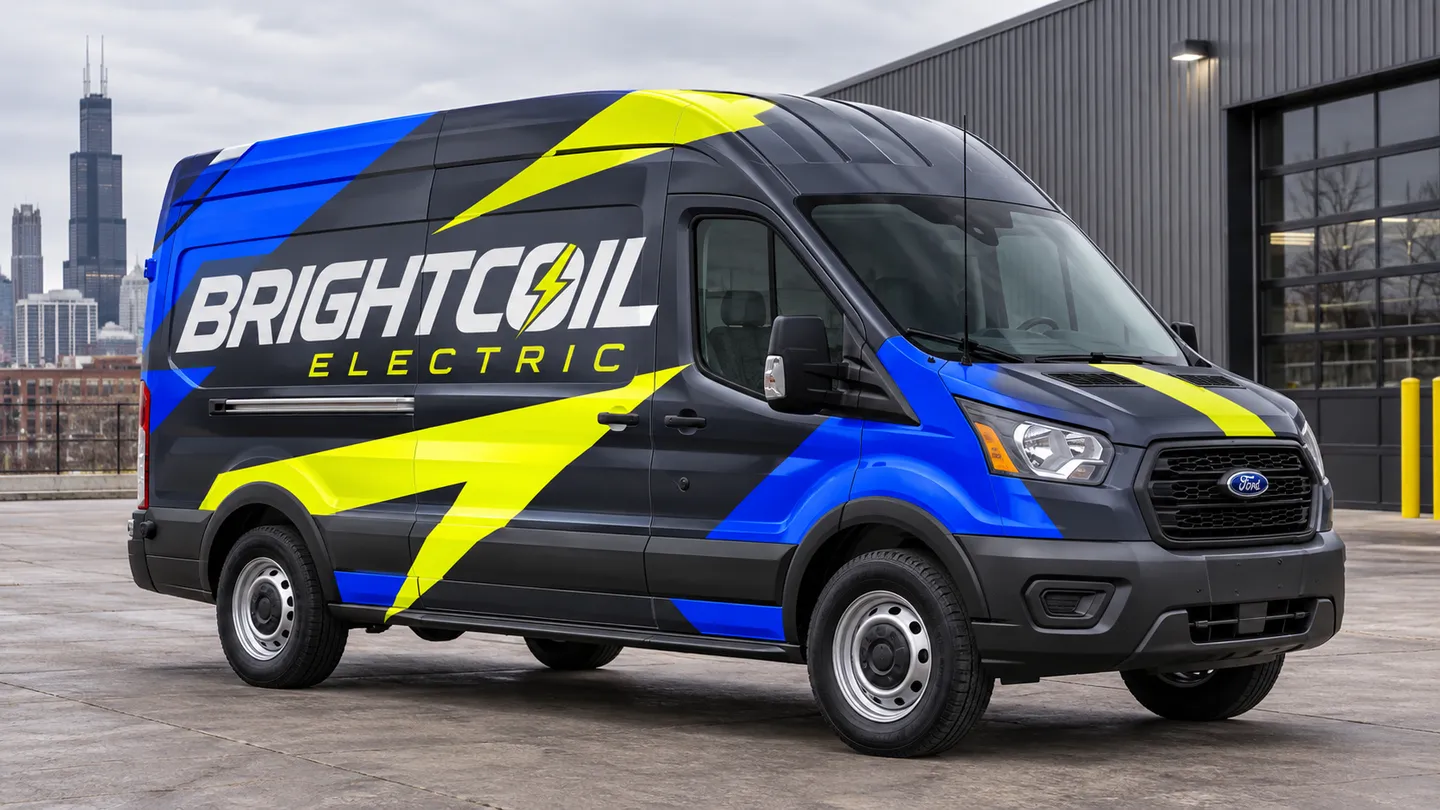
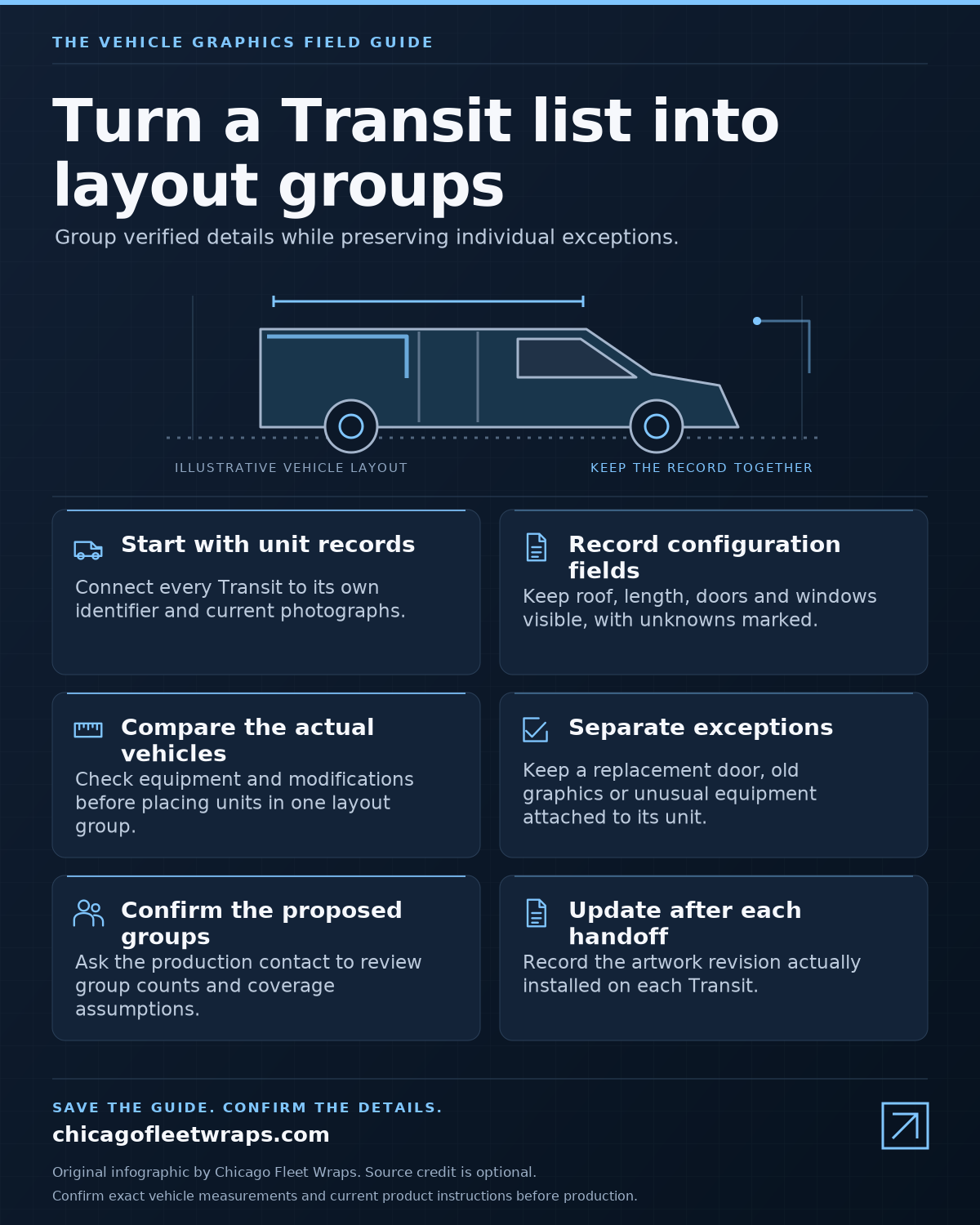
Original infographic from Chicago Fleet Wraps. You may reuse it; attribution is welcome and optional. Confirm project-specific dimensions, materials and instructions before using it for production.
The complete text
Connect every Transit to its own identifier and current photographs.
Keep roof, length, doors and windows visible, with unknowns marked.
Check equipment and modifications before placing units in one layout group.
Keep a replacement door, old graphics or unusual equipment attached to its unit.
Ask the production contact to review group counts and coverage assumptions.
Record the artwork revision actually installed on each Transit.
Reference the original infographic on the matching Chicago Fleet Wraps page. The resource and CFW share an operator.
Adapt the caption to your article. Using the infographic does not require a backlink.
Practical guide
Use meaningful configuration groups while keeping individual equipment and condition exceptions visible.
Read the guide: Group a Transit fleet by the differences that affect graphicsPractical guide
Record the changes a layout needs instead of losing them in separate emails and marked-up screenshots.
Read the guide: Create a useful Transit proof exception logPractical guide
Reuse verified records while checking what changed on the new van, the artwork and the operating requirements.
Read the guide: Prepare a repeat Transit graphics orderNo. Use the actual configuration and relevant equipment details. The year is a useful reference, but it does not replace a body-specific review of the vehicles being supplied.
Read the detailed guide: Group a Transit fleet by the differences that affect graphics
A phased approval can work if the groups, artwork revisions and release boundaries are explicit. Ask the shop to confirm which work is authorized and keep unresolved groups clearly outside that release.
Read the detailed guide: Create a useful Transit proof exception log
Ask the production contact what review is needed for the actual repeat. A previous approval does not establish that the new vehicle, wording or coverage is unchanged. Keep the release decision documented.
Read the detailed guide: Prepare a repeat Transit graphics order
No. Existing graphics, condition and the final scope can vary within a body group. Discuss those differences separately when confirming preparation and scheduling arrangements.
Read the detailed guide: Group a Transit fleet by the differences that affect graphics